
If you’re a small business owner, marketer, or founder, you’ve probably felt it: online marketing is changing faster than ever. What worked even two years ago, basic SEO, posting on social media “when you have time,” running a few ads, just isn’t enough anymore.
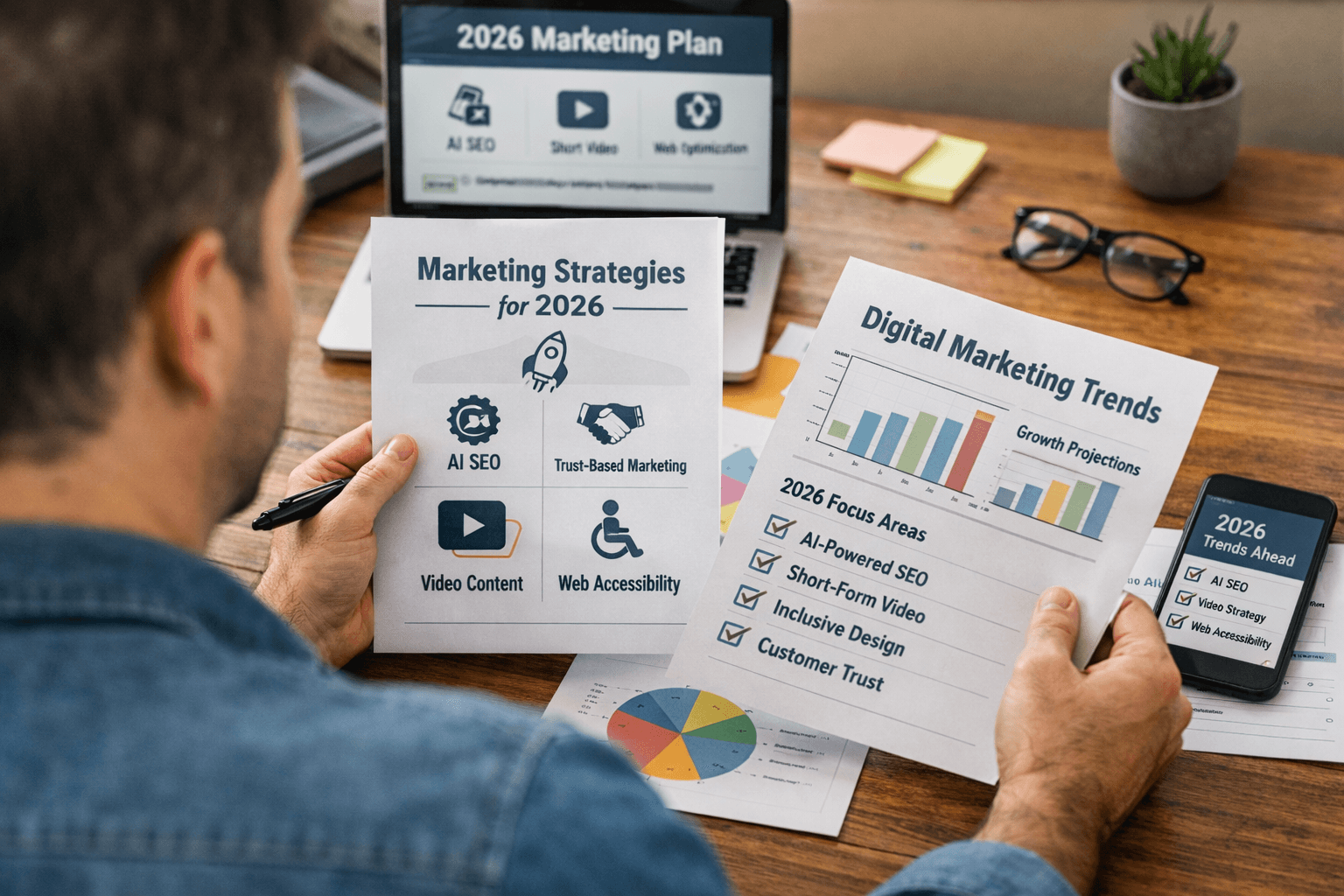
As we head into 2026, the digital landscape is shifting toward smarter systems, more human experiences, and platforms that reward trust over noise. The good news? You don’t need a massive budget or a full marketing department to keep up. You just need to understand where things are going and make intentional moves now.
Let’s break down the top online marketing trends for small businesses in 2026, in plain language, with real-world context.
1. AI-Powered Search Is Rewriting SEO (Literally)
Search is no longer just about Google rankings, it’s about being the answer.
With tools like ChatGPT, Gemini, Perplexity, and voice assistants becoming everyday search tools, businesses now need to optimize for AI-driven search results, not just traditional SERPs.
What this means for small businesses:
- Search engines and AI models prioritize clear, authoritative, well-structured content
- Blogs, FAQs, and service pages must answer questions directly
- Brands that sound human, credible, and helpful win
High-opportunity keywords to focus on:
- AI SEO optimization
- LLM-friendly content
- future of SEO for small businesses
- conversational search optimization
💡 Action tip: Write content the way your customers actually ask questions. Use headers, short paragraphs, and real explanations not keyword stuffing.
2. Trust-Based Marketing Is Replacing “Growth at All Costs”
People are tired of being sold to. In 2026, the brands that succeed are the ones that educate first and sell second.
Algorithms are already rewarding:
- Longer engagement times
- Saves, shares, and repeat visits
- Brands with a clear voice and values
What this looks like in practice:
- Educational blog content
- Transparent pricing and processes
- Authentic storytelling instead of polished perfection
High-opportunity keywords:
- trust-based marketing
- relationship marketing strategies
- brand authenticity online
- customer-first marketing
💡 Action tip: If your content sounds like it could belong to any business, it’s not doing its job. Let your expertise and your personality show.
3. Accessibility Is No Longer Optional (And It’s a Ranking Factor)
Web accessibility isn’t just about compliance; it’s about inclusion, usability, and reach. By 2026, accessible websites are expected, not exceptional.
Search engines and AI models favor sites that:
- Are easy to navigate
- Use proper headings and readable text
- Work well for all users, including those with disabilities
High-opportunity keywords:
- web accessibility for small businesses
- ADA-compliant websites
- inclusive digital marketing
- accessible web design trends
💡 Action tip: Accessibility improvements often boost SEO, conversions, and user trust at the same time. It’s one of the highest-ROI updates you can make.
4. Short-Form Video Evolves Into Short-Form Education
Short-form video isn’t going anywhere but in 2026, it’s less about trends and more about teaching.
The most effective content:
- Explains one idea clearly
- Solves a small problem fast
- Positions the creator as a trusted expert
Think less “viral dance,” more “here’s what you need to know.”
High-opportunity keywords:
- short-form video marketing
- educational content strategy
- video marketing for small businesses
- expert-led content
💡 Action tip: One blog post can become 5–10 short videos. Repurpose strategically instead of constantly creating from scratch.
5. Websites Become Living Marketing Systems (Not Static Brochures)
In 2026, your website is no longer a “set it and forget it” asset. It’s a dynamic growth engine.
Modern small business websites are expected to:
- Update content regularly
- Adapt based on analytics and search behavior
- Support SEO, accessibility, and conversions simultaneously
High-opportunity keywords:
- growth-driven web design
- continuous SEO optimization
- modern small business websites
- conversion-focused web design
💡 Action tip: Treat your website like a product, not a project. Small, consistent improvements beat massive redesigns every time.
6. Marketing Strategy Matters More Than Platforms
Here’s the hard truth most marketers won’t say out loud:
The platform matters less than the strategy behind it.
In 2026, businesses that thrive:
- Know who they’re talking to
- Understand why their marketing exists
- Choose platforms intentionally instead of chasing trends
High-opportunity keywords:
- digital marketing strategy 2026
- strategic communications for small businesses
- integrated marketing strategy
- long-term marketing planning
💡 Action tip: If you don’t have a strategy, you’re just posting. Strategy is what turns effort into results.
Final Thoughts: The Future Favors the Prepared (Not the Loudest)
Online marketing in 2026 isn’t about doing more; it’s about doing things better, smarter, and with intention.
Small businesses that invest in:
- Clear messaging
- Accessible, optimized websites
- Trust-building content
- AI-aware SEO strategies
…will outperform competitors with bigger budgets but weaker foundations.
If there’s one takeaway to remember, it’s this:
Marketing success in 2026 belongs to brands that communicate clearly, show up consistently, and genuinely help their audience.
And that? That’s something small businesses are uniquely good at.
Let's elevate your business online presence for 2026! Schedule your consultation today.