

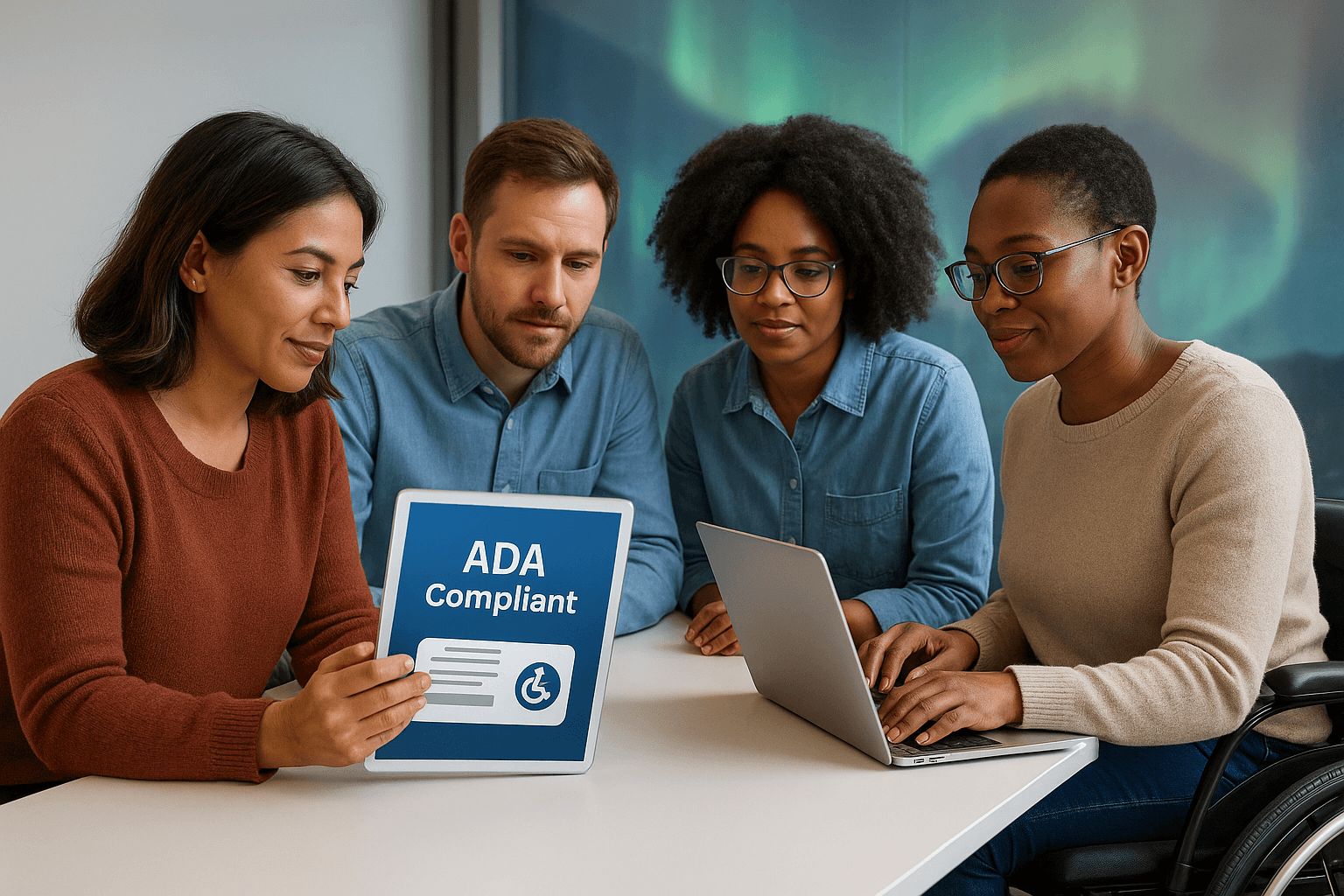
If you own a small business, your website isn’t just a digital storefront—it’s a legal responsibility. The Americans with Disabilities Act (ADA) requires websites to be accessible to all users, including those with disabilities.
Failing to comply isn’t just unethical—it can lead to costly lawsuits and lost customers.
Here’s everything you need to know in 2026 to keep your website compliant and competitive.
What Is ADA Compliance for Websites?
ADA compliance means ensuring your website can be accessed and used by people with disabilities, including:
- Visual impairments (screen reader users)
- Hearing impairments
- Motor disabilities
- Cognitive impairments
Websites that follow ADA standards provide equal access, regardless of a visitor’s abilities.
Why ADA Compliance Matters in 2026
1. Legal Risks and Lawsuits Are Increasing
Website accessibility lawsuits are on the rise. Small businesses are not exempt. Proactive compliance helps you avoid legal troubles.
2. Accessibility Improves SEO and UX
Search engines favor accessible websites with clear structure, alt text, and fast load times—boosting your rankings and user engagement.
3. Broaden Your Customer Base
Over 61 million Americans have a disability. Making your site accessible opens your business to a larger audience.
Key ADA Compliance Guidelines for Websites
1. Use Proper HTML Semantic Structure
Headings (H1, H2…), lists, and landmarks should be used correctly so screen readers can interpret the page hierarchy.
2. Provide Text Alternatives
- Alt text for images
- Transcripts for audio/video content
3. Keyboard Navigation
Users should navigate your entire site using the keyboard alone (Tab, Shift+Tab, Enter).
4. Color Contrast and Readability
Ensure text contrasts well with backgrounds for users with low vision or color blindness.
5. Avoid Content That Causes Seizures
Avoid flashing animations or content that flickers rapidly.
6. Use ARIA Landmarks and Roles
ARIA (Accessible Rich Internet Applications) help assistive technologies interpret your site better.
Tools to Test Your Website’s ADA Compliance
- WAVE Accessibility Tool
- Google Lighthouse Accessibility Audit
- axe Accessibility Scanner
- Manual keyboard navigation testing
How Elevation Tech Ensures ADA Compliance
We offer:
- Accessibility audits with actionable reports
- Web design focused on usability for all visitors
- Ongoing monitoring and updates to keep your site compliant
Case Study: ADA Compliance Boosted Traffic and Trust
A boutique retailer partnered with Elevation Tech to make their site ADA-compliant. Within 3 months:
- Organic traffic increased by 30%
- Bounce rate dropped by 15%
- Positive customer feedback on improved usability
Conclusion
ADA compliance is a must-have for small business websites in 2026. It protects you legally, improves SEO, and ensures all customers can engage with your brand.
At Elevation Tech, we help small businesses build and design ADA-compliant websites that are accessible, user-friendly, and SEO-optimized.
🌌 Need an ADA-compliant website that works for everyone? Contact Elevation Tech and let’s build accessibility into your digital future.